%20(1).png/:/rs=w:1209,h:605,cg:true,m/cr=w:1209,h:605)
Painter. Teacher. Innovator
The Journey of an Artist
Stanley Twardowicz (1917–2008) was one of the original generation of American Abstract Expressionists, an artist whose career spanned more than six decades and intersected with many of the defining figures of postwar American culture. A painter, photographer, educator, and lifelong innovator, Twardowicz exhibited alongside artists who would come to define the New York School while forging a distinctive artistic voice of his own. His work was recognized by leading museums and institutions, including the Museum of Modern Art, the Whitney Museum of American Art, and the Solomon R. Guggenheim Foundation, reflecting a lifetime dedicated to exploring the expressive power of color, light, and form.
Yet Stanley Twardowicz's legacy extends well beyond his exhibitions and accolades. He lived through—and actively participated in—one of the most remarkable periods in American artistic history, maintaining close friendships with figures such as Jack Kerouac, Philip Guston, Roy Lichtenstein, Allen Ginsberg, and many others who helped shape the cultural landscape of the twentieth century. Whether teaching generations of students at Hofstra University, painting alone in his studio with jazz playing softly in the background, or quietly documenting the people and moments around him through photography, Stanley remained driven by an unwavering belief that art was not simply something to create—it was a way of living. This website celebrates that extraordinary life, preserving both his artwork and the remarkable story behind it for future generations.
The Twardowicz Archive
The Stanley Twardowicz Collection represents one of the most comprehensive private archives of the artist's life and work. Preserved by his family, it includes hundreds of paintings, photographs, drawings, personal papers, exhibition catalogs, newspaper articles, correspondence, and rare historical images documenting his remarkable journey through American art. This website was created to present that archive in a clear and accessible way—bringing together the artwork, the history, and the personal stories behind one of the original voices of Abstract Expressionism, ensuring that Stanley Twardowicz's legacy will continue to inspire artists, scholars, collectors, and future generations.
Inside the Artist's Studio
Where Color Became Art
For Stanley Twardowicz, the studio was more than a workspace—it was where every painting began. Whether in his celebrated Main Street studio in Northport or later in the Crooked Hill Road studio he built at home, the setting changed very little over the years. Raw canvas was stretched across the floor, spray equipment stood ready, jazz filled the room, and the day's work unfolded in quiet concentration. It was here, often working alone for hours, that Stanley transformed light, color, and atmosphere into the paintings that would define his career. The studio was his sanctuary, a place where discipline, experimentation, and imagination came together every day for more than half a century.

An Original Voice of Abstract Expressionism
Artistic importance
Stanley Twardowicz belonged to the first generation of American Abstract Expressionists, a remarkable group of artists who redefined modern painting after World War II. While developing a distinctive visual language of luminous color and atmospheric form, he exhibited alongside many of the movement's most influential figures and earned recognition from leading institutions, including the Museum of Modern Art, the Whitney Museum of American Art, and the Solomon R. Guggenheim Foundation. Yet throughout his career, Stanley remained devoted not to fame, but to the endless pursuit of discovery through paint.
His work was driven by experimentation. Rather than depicting recognizable subjects, Stanley explored the emotional power of color, light, and space, creating paintings that invite viewers to experience rather than simply observe. Over six decades, he remained faithful to that vision, producing a body of work that reflects both the spirit of Abstract Expressionism and a uniquely personal artistic voice that continues to resonate today.
Who Was Stanley Twardowicz?
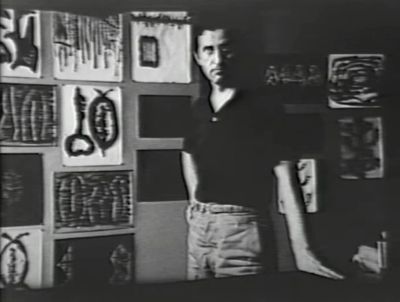
Stanley Twardowicz was far more than an accomplished painter.
He was a quiet observer, an innovator, a teacher, and a lifelong student of color. Those who knew him remember a man of remarkable discipline and humility, someone who found joy not in recognition but in the daily act of creating. While the art world celebrated exhibitions, museum acquisitions, and prestigious awards, Stanley remained most content inside his studio, surrounded by paint, jazz, and the anticipation of a blank canvas waiting to become something entirely new.
Throughout his life, Stanley built lasting friendships with some of the most influential artists and writers of the twentieth century, yet he never sought the spotlight for himself. He believed that an artist's greatest statement should always be the work itself. Whether teaching generations of students at Hofstra University, sharing conversations with Jack Kerouac and fellow members of the New York School, or quietly painting into his late eighties, Stanley lived with an unwavering commitment to curiosity, craftsmanship, and artistic integrity. His life stands as a reminder that greatness is often measured not only by achievement, but by a lifetime of dedication to one's craft.
The EarlyYears
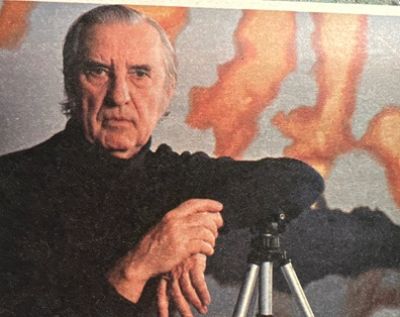
Born in Detroit, Michigan, on July 8, 1917,
Stanley Twardowicz came of age during a period of tremendous change in America. Like many of his generation, his early adulthood was shaped by the hardships of the Great Depression and the uncertainty of World War II. Before becoming a nationally recognized artist, he worked in Detroit's industrial plants while studying at the Meinzinger Art School, developing the discipline and work ethic that would define his life. Even in these formative years, Stanley displayed an intense curiosity about art and a determination to pursue a creative path despite the practical demands of everyday life.
Following his military service during World War II, Stanley committed himself fully to painting. His acceptance into the prestigious Skowhegan School of Painting and Sculpture placed him among many of the country's most promising young artists and marked the beginning of a remarkable career. The friendships, influences, and artistic ideas born during these years would eventually lead him to New York, where he would become part of the first generation of Abstract Expressionists and begin a journey that would shape American art for decades to come.
New York: A Revolution in Art
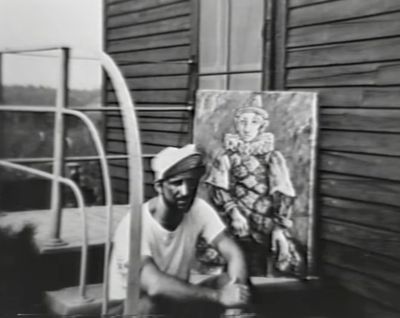
When Stanley Twardowicz arrived in New York, the city was becoming the center of the modern art world. During the late 1940s and 1950s, a remarkable generation of painters challenged traditional ideas of composition, subject matter, and technique, giving rise to what would become known as Abstract Expressionism. Working alongside artists such as Jackson Pollock, Willem de Kooning, Franz Kline, Philip Guston, Mark Rothko, Barnett Newman, and his close friend Roy Lichtenstein, Stanley became part of a movement that forever changed the direction of American art. The conversations that began in studios, galleries, and at the Cedar Tavern were not simply about painting—they were redefining the possibilities of artistic expression for generations to come.
For Stanley, these years were both professionally and personally transformative. His work quickly gained recognition through exhibitions at the Whitney Museum of American Art, the Museum of Modern Art, and other leading institutions, while his circle of friends expanded beyond painters to include writers, poets, photographers, and musicians who would shape twentieth-century American culture. It was during this extraordinary period that Stanley forged lifelong friendships with Jack Kerouac and other members of the Beat Generation, creating a unique bridge between the worlds of modern art and literature. Surrounded by creativity, experimentation, and constant dialogue, Stanley developed the distinctive artistic voice that would define his work for the next five decades, establishing himself as one of the original voices of postwar American abstraction.
Northport: Art, Friendship, and Inspiration
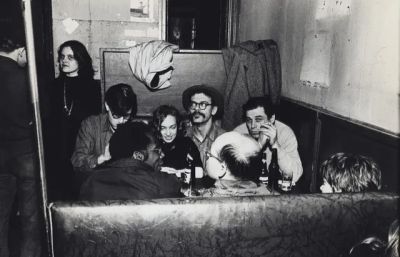
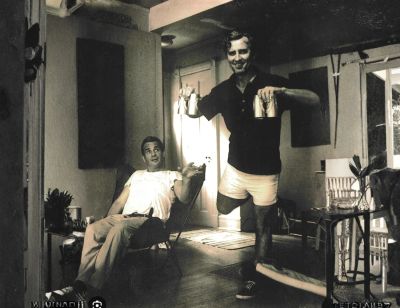
In 1958, Stanley Twardowicz left New York City for the quiet harbor village of Northport on Long Island. What might have appeared to be a retreat from the city's fast-paced art scene instead became one of the most productive and influential periods of his career. His Main Street studio quickly evolved into a gathering place for artists, writers, musicians, and friends, while Stanley continued exhibiting nationally and teaching at Hofstra University. Within the studio's white paneled walls, surrounded by spray equipment, paint, and jazz music, he produced many of the paintings that would define the next phase of his artistic journey.
Northport also became the setting for one of the most remarkable friendships in Stanley's life. Just a few blocks away lived Jack Kerouac, who spent countless hours in the studio writing, painting, and talking with Stanley about art, literature, and life. Their friendship, along with Stanley's close relationships with Roy Lichtenstein, Philip Guston, and many other members of the New York School, placed the Northport studio at the crossroads of two of America's most influential cultural movements—the Abstract Expressionists and the Beat Generation. More than simply a place to paint, the studio became a creative refuge where ideas were shared freely and lifelong friendships were formed, leaving an enduring mark on American art and literature.
Teaching the Next Generation
Hofstra and the influence beyond
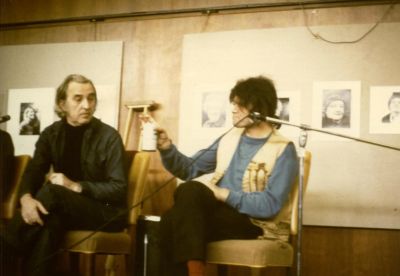
For more than three decades, Stanley Twardowicz balanced a distinguished career as a professional artist with his role as a professor of art at Hofstra University. While continuing to exhibit nationally and internationally, he inspired generations of students to think beyond technique and to embrace experimentation, curiosity, and personal expression. His classroom reflected the same philosophy that guided his own work: there were no formulas for creating meaningful art, only the discipline to explore, question, and discover. Many former students remember Stanley not only as an exceptional teacher, but as a quiet mentor who encouraged every artist to find an individual voice.
Teaching was never separate from Stanley's life as a painter—it was an extension of it. Each day he moved effortlessly between the classroom and the studio, sharing ideas with students before returning to his own canvases, where those same principles continued to evolve. Throughout his years at Hofstra, Stanley remained an active participant in the American art world, exhibiting widely while maintaining close friendships with many of the leading figures of the New York School. His influence extended far beyond the paintings he created, living on through the countless artists whose lives were shaped by his generosity, knowledge, and unwavering commitment to the creative process.
The Final Studio
Beyond the CanvasThe Studio on Crooked Hill R
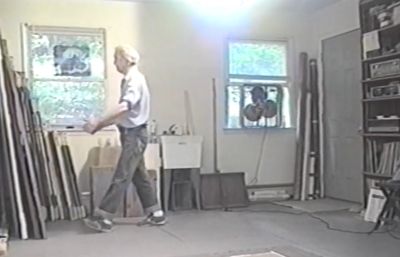
Following his retirement from Hofstra University and the sale of his beloved Main Street studio in Northport, Stanley Twardowicz entered the final chapter of his artistic life. Refusing to slow down, he and his wife, Lillian Dodson, created a new studio beside their home on Crooked Hill Road in Huntington, New York. The two-story addition, measuring approximately thirty by sixteen feet, became the setting for the last decade of his career. Though the surroundings had changed, Stanley's routine remained remarkably familiar. Each morning he drove his Volkswagen van to the Village Diner in Huntington for his customary breakfast of two eggs, toast, home fries, and coffee before returning home, turning on the jazz, closing the studio door, and spending the day painting. It was a rhythm that had defined his life for more than half a century.
Within the quiet walls of the Crooked Hill studio, Stanley continued to explore the expressive possibilities of color with the same curiosity and discipline that had guided him since the beginning of his career. Large canvases were pinned to the floor, spray equipment stood ready, and vibrant fields of color slowly emerged beneath his hands. Age never diminished his passion for creating. In 2004, at the age of eighty-seven, Stanley completed the final painting of his remarkable career in this very studio. It was a fitting conclusion to a lifetime devoted to art—proof that for Stanley Twardowicz, painting was never simply a profession or an achievement, but an enduring way of life.
Beyond the Canvas
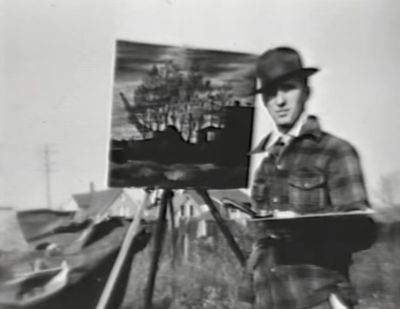
Stanley Twardowicz passed away on June 12, 2008, leaving behind far more than an extraordinary collection of paintings. He left a legacy built on creativity, integrity, curiosity, and an unwavering commitment to artistic exploration. Over a career spanning more than six decades, his work became part of the permanent collections of major museums, his influence reached generations of students through decades of teaching, and his friendships connected him to many of the defining artists and writers of twentieth-century America. Yet those who knew Stanley best remember him not for the honors he received, but for his quiet dedication to the simple act of creating.
A Lasting Legacy
Today, that legacy lives on through the paintings, photographs, writings, archival documents, and personal memories preserved by his family. This website was created to serve as the definitive historical archive of Stanley Twardowicz's life and work—bringing together the artwork, the stories, and the remarkable relationships that shaped one of America's original Abstract Expressionists. As new generations discover his paintings, research his career, and appreciate his contribution to American art, Stanley's vision continues to inspire, proving that truly meaningful art never reaches an end—it simply finds new audiences.
.png/:/rs=w:400,cg:true,m)